6G Explained: What Comes After 5G?
On this page
6G is the sixth generation of mobile networks, formally called IMT-2030. It promises faster and more reliable connections, and networks that can sense their surroundings and run AI. The first implementable standard is due in March 2029, and commercial launches are expected around 2030, mostly in mid-band spectrum rather than terahertz.
This guide explains what 6G is and how it differs from 5G and 5G-Advanced, the real timeline, how fast it will actually be, which spectrum it will use, what "sensing" and "AI-native" mean, where the limits are, and what 6G means for the UAE — which hosted the 2023 meetings that named 6G and aims to move to it by 2030.
Key takeaways
- 6G is still being written. The ITU set its framework in Dubai in 2023; 3GPP freezes the first 6G protocols in December 2028 and the implementable standard in March 2029.
- It isn't 100 times faster for users. The ITU's research targets are 50–200 Gbps peak and 300–500 Mbps for everyday use — three to five times 5G's 100 Mbps target. Terabit claims aren't in the official framework.
- The new ideas are sensing and AI. 6G networks are designed to detect and locate objects and people and to run AI. Both arrive first in 5G-Advanced.
- Spectrum decides the launch. WRC-23 in Dubai identified the upper 6 GHz band for mobile across Europe, Africa and the Middle East; WRC-27 in Shanghai considers more bands in late 2027.
- The UAE is aiming for 2030. The official roadmap moves from 5.5G to 6G by 2030, with Khalifa University's 6G Research Center leading a national committee alongside TDRA and the operators.
What is 6G?
6G is the next generation of mobile network technology after 5G. The ITU, the UN agency that coordinates radio spectrum, defines it as IMT-2030, and 3GPP, the industry body that wrote the 4G and 5G standards, is writing its specifications. It extends 5G's speed, capacity and reliability and adds new abilities: sensing, AI built into the network and wider coverage.
Definition
6G (IMT-2030) — the sixth generation of international mobile telecommunications. Its framework is ITU Recommendation M.2160, approved at the ITU Radiocommunication Assembly in Dubai in November 2023, which sets out six usage scenarios and 15 capabilities. "6G" is the market name; IMT-2030 is the formal one.
Three of the six usage scenarios extend what 5G already does. Three are new.
| Usage scenario | Builds on | What it covers |
|---|---|---|
| Immersive communication | 5G mobile broadband | Rich, interactive video and extended reality |
| Hyper-reliable, low-latency communication | 5G's ultra-reliable, low-latency mode | Machines and control systems with stricter reliability and delay needs |
| Massive communication | 5G's machine-type communication | Very large numbers of connected devices and sensors |
| Ubiquitous connectivity | New | Reaching rural, remote and uncovered areas, including by working with satellite networks |
| AI and communication | New | Distributed computing and AI: automated driving, offloading heavy computation, digital twins |
| Integrated sensing and communication | New | Using radio signals to detect, locate and track objects and people |
How is 6G different from 5G?
6G raises 5G's targets and adds capabilities 5G never had. The ITU presents its figures as research targets and examples rather than promises, and the binding minimum requirements haven't been approved yet.
| Capability | ITU research target for 6G |
|---|---|
| Peak data rate | 50, 100 or 200 Gbps (examples, under ideal conditions) |
| User-experienced data rate | 300 or 500 Mbps (examples) |
| Area traffic capacity | 30–50 Mbps per square metre |
| Spectrum efficiency | 1.5 to 3 times 5G |
| Latency over the air | 0.1–1 millisecond |
| Reliability | 99.999% to 99.99999% |
| Connection density | 1 million to 100 million devices per square kilometre |
| Mobility | 500–1,000 km/h |
| Positioning accuracy | 1–10 cm |
For comparison, the ITU's 5G targets were 20 Gbps peak, 100 Mbps user-experienced and 10 Mbps per square metre. So 6G's examples are roughly 2.5 to 10 times higher at the peak but three to five times higher for what a user can expect across a coverage area.
Two groups of capabilities have no 5G equivalent. Sensing covers estimating range, speed and angle, detecting objects, localisation, imaging and mapping. AI covers distributed data processing and learning, AI computing, and running AI models inside the system. Security and resilience, sustainability, coverage and interoperability complete the list.
The binding numbers come next. In February 2026 the ITU's expert group, Working Party 5D, agreed a draft report with 20 technical performance requirements, seven of them new, and the ITU's Study Group 5 is due to approve it on 1 December 2026. The ITU is explicit that these are minimum levels for evaluating candidate technologies; they don't guarantee real-world deployment performance.
Common misconception
"6G will run at 1 terabit per second, 100 times faster than 5G." Terabit and "100 times" figures aren't in the ITU framework. Its examples are 50–200 Gbps peak under ideal conditions and 300–500 Mbps for the rate a user can expect across a coverage area. Latency claims of one microsecond are off too: the ITU's research target is 0.1–1 millisecond over the air, 100 to 1,000 times longer.
When will 6G be available?
The first implementable 6G standard is due in March 2029, and the first commercial networks are expected between late 2029 and 2030. No 6G service exists anywhere today, because the standard isn't finished.
The road to 6G
- 01Vision
- ITU framework M.2160
- Named IMT-2030
- Approved in Dubai
2023 — what 6G should do
- 02Studies
- 3GPP Release 20
- Use cases (TR 22.870)
- Radio needs (TR 38.914)
2024–2026 — what's possible
- 03Requirements
- ITU approval, Dec 2026
- Proposals, Feb 2027–Feb 2029
How candidates are judged
- 04Standard
- 3GPP Release 21
- Protocols, Dec 2028
- Implementable, Mar 2029
What vendors build to
- 05Launch
- Early networks, late 2029
- Wider rollout, 2030s
Vendor forecasts
| Date | Milestone | Status |
|---|---|---|
| Nov 2023 | ITU Radiocommunication Assembly in Dubai approves the 6G framework and the name IMT-2030 | Done |
| Dec 2023 | WRC-23 in Dubai identifies the upper 6 GHz band for mobile across Europe, Africa and the Middle East | Done |
| Dec 2024 | 3GPP approves its first 6G radio study, co-signed by more than 50 companies | Done |
| Mar 2026 | 3GPP approves its 6G use-case study (TR 22.870, more than 590 pages) | Done |
| Jun 2026 | 3GPP approves its 6G scenarios and requirements report (TR 38.914) and fixes the Release 21 schedule; the ITU completes draft evaluation guidelines | Done |
| 1 Dec 2026 | ITU Study Group 5 due to approve the 6G performance requirements | Scheduled |
| Feb 2027 | ITU opens submissions of candidate 6G technologies, until February 2029 | Scheduled |
| Mar 2027 | Release 21 content approved; 6G service requirements frozen | Scheduled |
| Oct–Nov 2027 | WRC-27 in Shanghai decides on additional mobile bands | Scheduled |
| Jun 2028 | 6G architecture frozen | Scheduled |
| Dec 2028 | 6G protocols frozen | Scheduled |
| Mar 2029 | Implementable specification frozen | Scheduled |
| Mid-2030 | Latest date for the full 6G system definition to reach the ITU | Deadline |
| Late 2029–2030 | First commercial networks | Forecast |
Equipment makers agree on the window. Ericsson expects the first implementable specifications at the end of 2028 or early 2029 and commercial services around 2030. Nokia expects trials as early as 2028 and the first commercial networks and devices in early-adopter countries in late 2029, followed by large-scale deployments.
What this means
For planning purposes, 6G is a 2030s technology. Anything sold as "6G" before the standard freezes in 2029 is 5G-Advanced or a pre-standard trial. Budgets for the next three years belong to 5G-Advanced, which is where 6G's ideas land first.
What is the difference between 5G, 5G-Advanced and 6G?
5G-Advanced, marketed as 5.5G, is an upgrade of 5G defined in 3GPP Releases 18 to 20. 6G is a new generation with a new radio, specified from Release 21. Several 6G ideas, including AI in the network and sensing, arrive first in 5G-Advanced.
| 5G-Advanced ("5.5G") | 6G | |
|---|---|---|
| What it is | An upgrade of today's 5G | A new generation with a new radio |
| 3GPP releases | 18 (the first 5G-Advanced release), 19 (complete December 2025) and 20 | 20 for studies, 21 for the first standard |
| Availability | Rolling out now | Standard in 2029; launches from about 2030 |
| Headline features | AI and machine learning in the network, energy savings, satellite links, extended reality; a sensing standard targeted for March 2027 | New usage scenarios for sensing, AI and ubiquitous coverage, with higher targets across the board |
6G is more evolution than revolution in its engineering. The 3GPP leadership's April 2026 briefing showed the 6G radio reusing 5G's waveforms, modulation and error-correcting codes, and 3GPP is designing 5G and 6G to share the same spectrum on the same carriers, so operators can introduce 6G without switching 5G off.
5G also has most of its growth ahead. Ericsson counted 3.1 billion 5G subscriptions in the first quarter of 2026 and forecasts 6.4 billion by the end of 2031, when 5G should carry 85% of mobile data traffic, up from 48% at the end of 2025. But of the roughly 390 operators that have launched 5G, only a little more than 90 have launched standalone 5G, which runs on a full 5G core network. That gap shapes 6G: 3GPP's leadership says 6G must cost operators less to build and run than today's networks, and its 590-page use-case study recorded strong support for cost-cutting features.
Common misconception
"5.5G is an early version of 6G." 5.5G is a marketing name for 5G-Advanced, 3GPP Releases 18 to 20. It brings some 6G ideas early, but it's still 5G. The first 6G standard is Release 21, which won't be implementable until March 2029.
What spectrum will 6G use?
6G will launch mainly in mid-band spectrum, especially the upper 6 GHz band (6,425–7,125 MHz) and parts of the 7–8 GHz range, alongside existing 5G bands. Terahertz frequencies, a staple of early 6G hype, won't be ready for commercial mobile networks by 2030, according to EU spectrum regulators.
| Band | Status | Where |
|---|---|---|
| Existing 5G bands | 6G designed to share carriers with 5G | Worldwide |
| Upper 6 GHz (6,425–7,125 MHz) | Identified for mobile at WRC-23; the EU's primary 6G band for 2030 | Europe, Africa and the Middle East; 7,025–7,125 MHz across Asia-Pacific |
| 4.4–4.8 GHz | Under study for WRC-27 | Europe, Africa, Middle East and Asia-Pacific |
| 7.125–8.4 GHz, or parts of it | Under study for WRC-27; the US is studying 7.125–7.4 GHz | Americas and Asia-Pacific; in Europe, Africa and the Middle East only 7,125–7,250 and 7,750–8,400 MHz |
| 14.8–15.35 GHz | Under study for WRC-27 | Worldwide |
| Sub-terahertz | Research only; not ready for commercial mobile by 2030 | — |
The World Radiocommunication Conference, the treaty meeting that allocates spectrum, is where these decisions happen. WRC-23, held in Dubai with more than 3,900 delegates from 163 member states, identified the upper 6 GHz band for mobile across Europe, Africa and the Middle East, a region that includes the UAE. WRC-27 runs from 18 October to 12 November 2027 in Shanghai; its agenda item 1.7 covers the new candidate bands.
Europe's regulators have picked a direction. The EU's Radio Spectrum Policy Group says the upper 6 GHz band will be the primary band for introducing 6G in Europe by 2030, with at least 540 MHz of continuous spectrum depending on WRC-27. The US is clearing its own path: a December 2025 presidential memorandum, "Winning the 6G Race", directed the NTIA to study moving federal users out of 7.125–7.4 GHz within 12 months, and the FCC plans to auction 160 MHz of upper C-band spectrum in 2027, creating a 440 MHz block of mid-band spectrum.
Three constraints will shape the final map. Incumbents come first: parts of the 7–8 GHz range carry government and national-security systems, which is why the US is studying relocating federal users and EU regulators want coexistence conditions for existing services defined at WRC-27. Wi-Fi comes second, because the same 6 GHz spectrum is prized for indoor wireless. Physics is third: 3GPP's leaders said in April 2026 that it was still unclear whether frequencies around 7 GHz can reach the same coverage as today's 3.5 GHz 5G band, especially from phone to mast, which points to more antennas and more sites.
What does "sensing" mean in 6G?
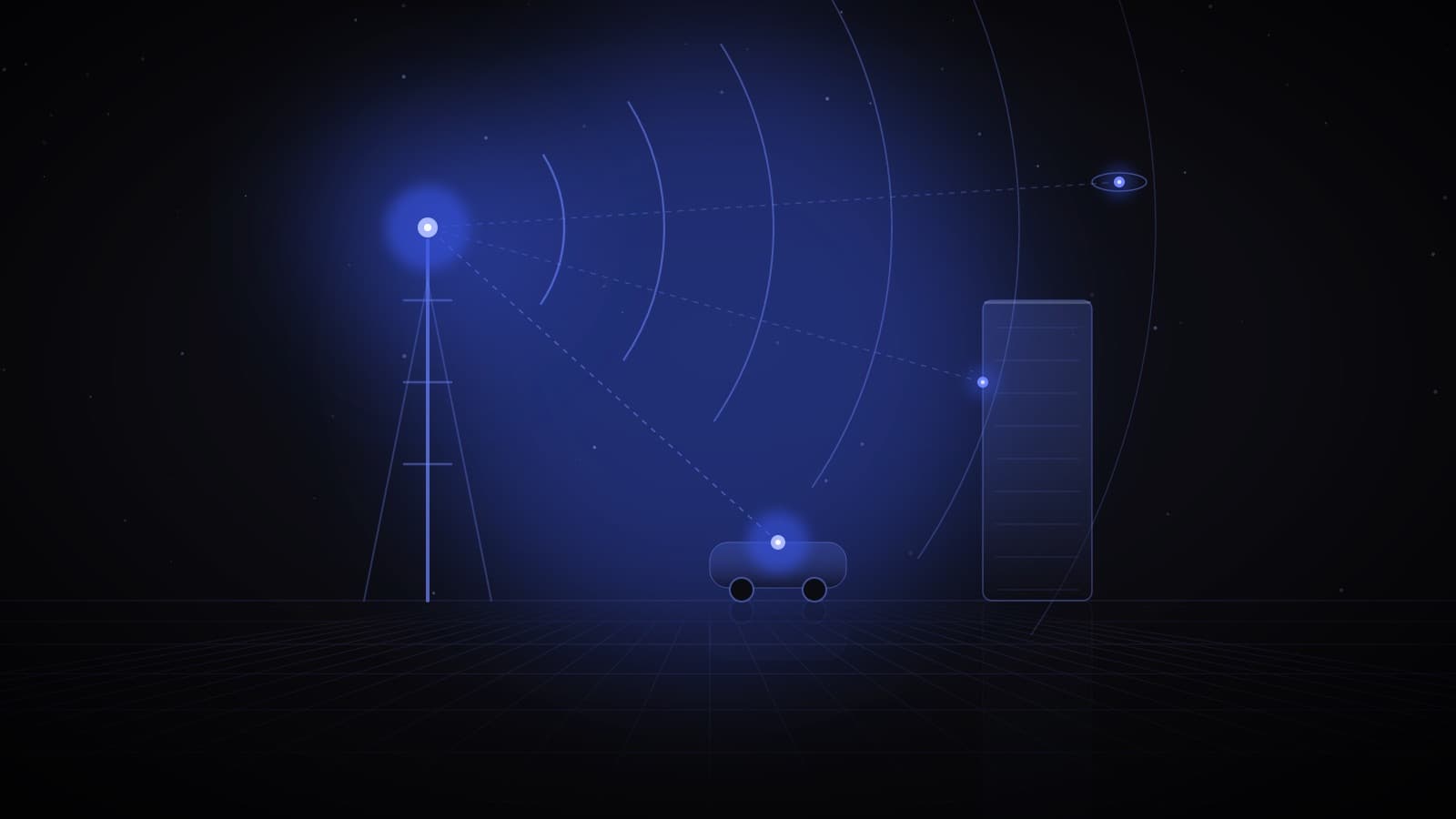
Sensing means the network uses its own radio signals, much like radar, to detect, locate and track objects and people, including ones that don't carry a device. The ITU calls it integrated sensing and communication, or ISAC. It's one of 6G's three new usage scenarios, and a first version arrives in 5G-Advanced.
Definition
Integrated sensing and communication (ISAC) — using the mobile network for wide-area sensing as well as communication: estimating range, velocity and angle, detecting objects and presence, localisation, imaging and mapping. (ITU-R M.2160)
The ITU's examples show how broad the idea is: assisted navigation; activity and movement tracking, such as gesture recognition, fall detection and vehicle or pedestrian detection; environmental monitoring, such as rain and pollution; and live data about surroundings for AI, extended reality and digital twins. The ITU's new 6G evaluation guidelines add test environments built specifically for sensing, in factories and across cities.
Sensing is earlier than the hype suggests. In September 2026 3GPP reported that its 5G-Advanced sensing study was complete and a sensing work item had started, targeted for March 2027. The 6G-specific sensing study in 3GPP's working groups hadn't started as of April 2026.
What this means
A network that can detect people without phones raises the same questions as cameras and Wi-Fi tracking: who sees the data, how long it's kept, and whether it identifies individuals. Expect sensing to arrive first in controlled settings such as factories, roads and airspace, where the benefits are clear and privacy is simpler to manage.
What does "AI-native" mean for 6G?
AI-native means AI is designed into the network from the start, both to run the network and to serve AI to users, rather than bolted on later. The ITU makes "AI and communication" a 6G usage scenario of its own, covering distributed learning, AI computing and model inference across devices and networks.
The ITU's examples include assisted automated driving, devices collaborating on medical assistance, offloading heavy computation from devices to the network, and building and running predictions with digital twins. The first steps are already in 5G: Release 18 brought AI and machine learning into the standard, and a third phase of AI for the radio network is targeted for March 2027. 3GPP is also discussing "RAN for AI", how the network can better carry AI services such as interactive assistants.
There are two caveats. The 3GPP leadership's briefing warned that working groups faced far more proposed AI use cases than they could standardise, and that the 6G system must still be able to operate without AI. Treat "AI-native" as a direction of travel, not a feature list. The compute that AI-heavy networks will lean on is covered in the AI infrastructure guide.
What will 6G be used for?
Most 6G use cases are projections, not products. The ITU framework points to immersive video and extended reality, machines and robots that need reliable, near-instant control, huge sensor networks, coverage for remote areas, AI services, network sensing and digital twins. Many start on 5G-Advanced first.
| Use case | 6G usage scenario | Where it stands in 2026 |
|---|---|---|
| Extended reality and immersive video | Immersive communication | Possible on 5G; 6G targets more capacity |
| Remote control of machines and robots | Hyper-reliable, low-latency communication | 5G-Advanced improves reliability; 6G raises the targets |
| Sensors at massive scale, such as smart cities | Massive communication | 5G IoT today; 6G targets up to 100 million devices per km² |
| Coverage for remote areas | Ubiquitous connectivity | 5G standards already include satellite links; 6G is designed for ground and satellite networks together |
| AI services and digital twins | AI and communication | AI entering 5G-Advanced networks now |
| Detecting people, vehicles and weather | Integrated sensing and communication | First 5G-Advanced sensing standard targeted for March 2027 |
The UAE's official roadmap lists similar ambitions: transmitting human senses digitally with low latency and high accuracy, better robotics and AI, autonomous transport, and healthcare uses such as remote surgery and diagnostics. The robots and vehicles themselves are covered in physical AI explained.
What are the limits and risks of 6G?
The biggest risks are coverage, cost and spectrum, not speed. 6G's likely launch bands haven't yet been shown to cover as well as today's 5G, many operators haven't finished paying for 5G, and the best bands are contested.
- Coverage is unproven. 3GPP's leaders say it's unclear whether around 7 GHz can match today's 3.5 GHz coverage, especially for uplink. Massive antenna arrays and more sites are the likely answer, and both cost money.
- The business case is thin. Only a little more than 90 of about 390 5G operators have launched standalone 5G, and 3GPP's own use-case study recorded strong support for features that cut operators' costs.
- Spectrum is contested. Mobile competes with Wi-Fi for 6 GHz, and with government and other existing users at 7–8 GHz.
- AI is under-specified. Too many proposed use cases, and a requirement that 6G work without AI.
- Sensing is early. 6G sensing studies hadn't started in 3GPP's working groups by April 2026.
- The schedule is tight. Protocols in December 2028, the implementable standard in March 2029 and the ITU deadline in mid-2030 leave little slack.
- Energy has no number. The ITU framework lists energy efficiency as a capability but sets no numeric target.
- Requirements aren't user experience. The ITU's minimum requirements are for evaluating technologies and don't guarantee real-world performance.
What does 6G mean for the UAE?
The UAE runs 5G and 5G-Advanced today and has an official target to move to 6G by 2030. A national committee led by Khalifa University's 6G Research Center, with manufacturers, operators and the regulator TDRA, is running the research and trials, and TDRA provides frequencies and regulatory frameworks for experiments.
The UAE has an unusual place in 6G's history. Dubai hosted both the 2023 Radiocommunication Assembly, which approved the 6G framework and the name IMT-2030, and WRC-23, which identified the upper 6 GHz band for mobile across the UAE's region. According to the UAE government, the country was first in the Arab region and fourth globally to launch 5G.
| Area | Where the UAE stands |
|---|---|
| Official target | 5G-Advanced (5.5G) now; "targeted transition" to 6G by 2030 (UAE government) |
| 5G base | More than AED 3 billion invested and more than 11,000 5G sites, covering over 98% of the population outdoors, as of early 2024 (TDRA and Khalifa University) |
| Trials | Operators reached 10 Gbps in a 6 GHz band trial using 400 MHz; an indoor TII trial of reconfigurable intelligent surfaces extended coverage sevenfold and reduced blockage almost fourfold |
| Licences | e& and du licences renewed for 20 years, from 9 August 2026 to 8 August 2046, with new obligations on network resilience, backup capacity and international connectivity (TDRA) |
| Satellite | Starlink granted a 10-year licence for satellite broadband in August 2026 (TDRA) |
| Fibre | First in the world for household fibre penetration for the tenth year running, at 99.7% (TDRA) |
| Research | Khalifa University's 6G Research Center took first place among 65 teams in the ITU's 2025 Large Wireless Model Challenge; its TelecomGPT-R1 model topped the GSMA Open Telco leaderboard in June 2026 with an average score of 89.6% (Khalifa University) |
The satellite licence and the fibre network matter more than they look. 6G's "ubiquitous connectivity" assumes ground and satellite networks working together, and every small cell a denser 6G network needs has to be connected to fibre.
Common misconception
"Dubai already has 6G." No network anywhere offers 6G, because the standard won't be implementable until March 2029. UAE operators sell 5G and 5G-Advanced. The UAE's 6G work today is research, trials and preparation for a transition targeted for 2030.
How will 6G affect buildings and real estate?
6G will make in-building coverage a bigger part of a building's value. Its likely launch bands sit higher than the 3.5 GHz band that carries much of today's 5G, and 5G already struggles indoors, so owners should expect more indoor antennas, more small cells and more demand for fibre and riser space.
The UAE has already seen this with 5G. The 2024 white paper by TDRA and Khalifa University noted that 5G's higher frequencies struggle to get through walls, making it harder to reach people in high-rise buildings, which then need dedicated in-building systems. At the time only around 7% of in-building system sites in the UAE had 5G, and around 32% of users in residential and suburban areas had weak or no 5G coverage.
Four implications for owners and developers:
- Indoor coverage becomes infrastructure. Riser space, fibre paths and room for indoor radio equipment will serve 5G-Advanced first and 6G later. The indoor trial of reconfigurable intelligent surfaces suggests some coverage may come from the building fabric itself.
- Wi-Fi planning gets tied to spectrum policy. How the 6 GHz band is split between Wi-Fi and mobile will shape in-building wireless design.
- The network may become a sensor. Network sensing could one day detect presence and movement, overlapping with the occupancy sensors in smart buildings and raising the same privacy questions.
- Digital twins get a data pipe. The ITU expects digital twins to become a powerful tool in industries including construction, and 6G is designed to feed them live data. See digital twins in real estate.
What this means
For developers, connectivity is joining power and cooling as building infrastructure that's expensive to retrofit. Planning for indoor coverage in new projects now serves today's 5G tenants and leaves room for 6G.
How should businesses prepare for 6G?
Most businesses don't need a 6G strategy yet. They need a 5G-Advanced plan and a way to tell real 6G milestones from marketing.
- Ignore "6G-ready" labels before 2029. Ask which 3GPP release a product supports and what it does today.
- Get value from 5G-Advanced now. Standalone 5G, AI-assisted network operations, satellite backup and, from 2027, network sensing are where 6G's ideas land first.
- Treat in-building coverage as infrastructure. Specify riser space, fibre and room for indoor radio equipment in new buildings and major refurbishments.
- Plan sensing data like personal data. Decide early who can access presence and movement data and how long it's kept.
- Track four dates: 1 December 2026 (ITU requirements), October–November 2027 (WRC-27), December 2028 (protocol freeze) and March 2029 (implementable standard).
- In the UAE, follow TDRA and the national 6G committee for trial frequencies, pilots and spectrum decisions.
What is likely to happen next?
The next milestones are regulatory and standards dates, not launches. Watch these:
- December 2026: the ITU's Study Group 5 approves the 6G performance requirements and evaluation guidelines, and the NTIA's 7 GHz study, ordered in December 2025 with a 12-month deadline, is due.
- 2027: the ITU opens submissions in February; 3GPP approves Release 21's content in March, when 5G-Advanced sensing is also due; the FCC's upper C-band auction is scheduled; and WRC-27 decides on new mobile bands in Shanghai in October and November.
- 2028–2029: 6G protocols freeze in December 2028 and the implementable standard in March 2029, with trials possible from 2028.
- Late 2029–2030: the first commercial networks in early-adopter countries, and the UAE's target date for its transition.
Final takeaway
6G is the network generation the 2030s will run on, but in 2026 it's still a standard being written. It will be faster, though not by the hundred-fold margins often claimed; the real changes are networks that sense, run AI and reach everywhere, including by satellite. The timeline is set: requirements in December 2026, spectrum decisions at WRC-27 in late 2027, an implementable standard in March 2029 and first launches around 2030. For the UAE, which hosted the meetings that named 6G and aims to adopt it by 2030, the practical work now is 5G-Advanced, in-building coverage and the national trials.
AI strategy
Working out where AI fits in your business?
I help teams separate the use cases worth automating from the ones that only demo well — then build the workflow, the integrations and the guardrails.
Sources
Primary sources checked for this article. Figures reflect the dates shown.
- Recommendation ITU-R M.2160-0: Framework and overall objectives of the future development of IMT for 2030 and beyond — ITU-R, November 2023
- IMT-2030: Technical requirements for the 6G future — ITU, March 17, 2026
- IMT towards 2030 and beyond (IMT-2030) — ITU-R
- Timeline for Release 21 — 3GPP, June 10, 2026
- Release 20 — 3GPP
- Release 19 — 3GPP
- First 6G RAN study approved — 3GPP, June 14, 2026
- First study, new generation — 3GPP, March 23, 2026
- Working Group Reports to RAN Plenary #113 — 3GPP, September 14, 2026
- 3GPP Release 20 – An Update on 3GPP 6G Technology Studies (webinar slides) — ATIS, April 9, 2026
- World Radiocommunication Conference revises the ITU Radio Regulations to support spectrum sharing and technological innovation — ITU, December 15, 2023
- Main WRC-23 results with respect to terrestrial services — ITU Radiocommunication Bureau, September 16, 2024
- ITU-R Preparatory Studies for WRC-27 — ITU-R
- Key dates and deadlines – WRC-27 — ITU
- RSPG Opinion on 6G spectrum roadmap (RSPG26-013 FINAL) — Radio Spectrum Policy Group (EU), June 16, 2026
- Winning the 6G Race — The White House, December 19, 2025
- Statement of Chairman Brendan Carr on the Upper C-band Report and Order — FCC, July 22, 2026
- Ericsson Mobility Report: 5G subscriptions top three billion as uplink gains momentum — Ericsson, June 16, 2026
- Charting the path to 6G — Nokia
- Telecommunications | The Official Platform of the UAE Government — UAE Government (u.ae)
- 6G Next Generation Connectivity in the UAE — TDRA and Khalifa University, July 2024
- TDRA Board Renews Telecom Licences of Both Operators for Another 20 Years — TDRA, August 12, 2026
- TDRA Grants Starlink a License to Provide Satellite Internet Services in the UAE — TDRA, August 28, 2026
- Khalifa University 6G Research Center Wins First Place in ITU Large Wireless Model Challenge 2025 — Khalifa University, November 3, 2025
- Khalifa University's New AI Model 'TelecomGPT-R1' Tops GSMA Open Teleco Leaderboard — Khalifa University, June 2026